

DMB, DAB and DAB+ are all part of an open standard called Eureka-147, the de facto standard for digital radio and mobile television on four continents. Eureka-147 is a term not commonly used, so the technology is usually referred to as DMB/DAB+ (which also included DAB). It supports the broadcasting of other services than radio and TV, also traffic data, video files, sound clips or electronic magazines or books may be transferred via the distribution technology. DMB/DAB+ also works very well in combination with the internet. You will then get the best from both worlds, an effective way of reaching everyone without any constraints and the possibility to also tailor services and content to the individual through the return channel.
Let us start by killing four myths.
1. DMB is not a standard for South Korea only. It is used in over 40 countries with a total of nearly 100 million receivers sold.
2. DMB is not a single standard. It belongs to Eureka-147 which includes DAB and DAB+, making it extremely flexible and versatile for Mobile TV, Digital Radio and Data Services.
3. DMB or T-DMB is not an accurate term. It should be referred to as DMB/DAB+.
4. DVB-H is not the European mobile TV standard. DVB-H is dead and no longer in use anywhere.
The DMB/DAB+ technology has been introduced commercially in Europe, South East Asia, Australia and even Africa. It is also being introduced on a trial basis in North America while it is being considered in South America. DMB/DAB+ is emerging as the de facto standard for digital radio and mobile TV on four continents.
Status of DMB/DAB+ in Europe
DMB/DAB+ has been introduced successfully in countries such as Germany, United Kingdom, Italy, Switzerland, Norway and Denmark while it is being introduced in the Netherlands, Poland, Latvia and other countries in 2012.
Digital radio is most prevalant, although we see mobile TV in Norway and the Netherlands with discussions about it in Germany, Italy and the UK. Mobile TV is not yet as successful as forecasted some years ago, but it must be seen in combination with radio and it is rising in popularity.
There are four main reasons for why mobile TV has been slow to take up in Europe:
1. There was too much focus on one standard (DVB-H) from both mobile network operators and the EU. In the end it turned out to be the wrong technology.
2. MNOs has focused on the distribution of mobile TV via their 3G networks and only recently faced the downsides of such an approach as the networks are suffering from a huge growth of data traffic. They are now starting to realize the necessity of broadcasting working together with their mobile telephony networks.
3. DMB was launched in Germany without success in 2006 due to lack of devices, too poor coverage and with a launch too dependent and too close to the FIFA World Cup. This created the illusion that DMB would not work in Europe, and it stopped manufacturers from introducing new devices.
4. It has taken until now to realistically create a positive business case based on available devices, multiple revenue streams and the fact that DMB/DAB+ is much more cost effective and sustainable than competing technologies.
Status of DMB/DAB+ outside Europe
Australia has launched digital radio with great success. In South East Asia we see promising commercial launches of mobile TV and digital radio in Malaysia, Vietnam, Hong Kong, China and Indonesia while South Africa has started a trial service and is about to go live commercially with both mobile TV and digital radio. Korea goes without saying, but an own sound codec (BSAC) is being used, something that makes devices incompatible with the rest of the world. Korea is currently considering DAB+ for radio.
In North America we see trials in Mexico and Dominican Republic while at least one country in South America is considering DMB/DAB+.
Why DMB/DAB+ is succeeding this time?
1. There is a focus on both television (DMB) and radio (DAB/DAB+).
2. Digitalization of radio is picking up. The Norwegian government has decided to switch off FM in January 2017. Other countries are set to follow suit. United Kingdom, Denmark, Switzerland and the Netherlands are likely to also announce FM switch-offs.
3. The inclusion of additional services that work through a combination between broadcasting (DMB/DAB+) and the internet (3G, 4G, WLAN, etc.). This creates a more attractive offering and opens up possibilities for increased revenues.
4. Roaming will be an important driver, and IDAG is developing a central operation for a CAS system that enables roaming of pay TV channels and data services providing for instance traffic information to navigation systems in cars.
5. The additional services on the digital broadcast platform will be attractive for end users and enable new revenue streams and formats
6. DMB/DAB+ is a very cost effective technology that ensures efficient bandwidth usage whilst ensuring low power consumption. It is greener than the alternatives.
7. The growing market across Europe, South East Asia, Australia and Africa makes it cheaper to provide mass market terminals. This also creates more choice for the consumers and better access to DMB/DAB+ services.
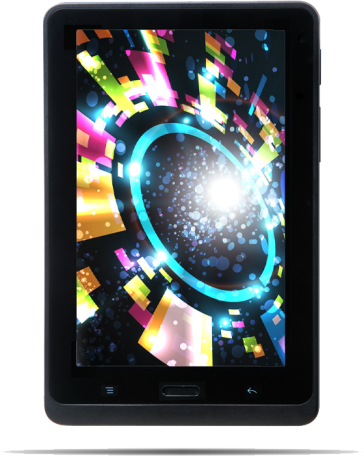
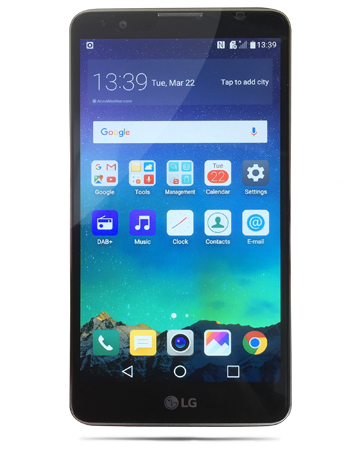
8. New and attractive devices are on the market. These include dongles for Apple products, tablet PCs and mobile smart phones running Android. Mobile TV and radio will become a must-have functionality of smartphones, as was the case with built-in cameras.
9. Broadcasters are very much involved in the introductions of DMB/DAB+. This was hardly the case with 3G or DVB-H based services. Broadcasters have strong marketing muscles, contributing to successful DMB/DAB+ introductions.
10. MNOs are realizing that their networks are becoming increasingly clogged and that broadcasting of mobile TV and digital radio can help offload traffic.
November 23, 2011
October 04, 2011
Denmark to Switch Off FM, Replace by DMB/DAB
Yesterday, Danish Minister of Culture, Mr. Uffe Elbæk stated that he wants to switch off FM in Denmark too. He wants to prioritize radio as a medium by speeding up digitalization, according to the radio oriented news site radionyt.com.
He writes: "The DAB technology and internet radio give new possibilities to secure an increased diversity of nationwide and local radio offerings. Local and regional radio will be digitalized through DAB, and as was done in Norway, a switch off date for FM will be set."
It is not clear when the date will be determined or when switch off will occur.
Other countries such as United Kingdom, Germany, the Netherlands and Australia do also aim for a switch off date for FM. The UK may be the first to switch off. They will switch off FM two years after 50% of all radio listening occurs digitally. It is now at almost 30%. If that is achieved before 2015, they can beat Norway to it as being the first country to switch off.
Can Denmark do it even faster? And which other countries will follow suit?
![]() |
| Creative Commons by NilsB. |
Yesterday, Danish Minister of Culture, Mr. Uffe Elbæk stated that he wants to switch off FM in Denmark too. He wants to prioritize radio as a medium by speeding up digitalization, according to the radio oriented news site radionyt.com.
He writes: "The DAB technology and internet radio give new possibilities to secure an increased diversity of nationwide and local radio offerings. Local and regional radio will be digitalized through DAB, and as was done in Norway, a switch off date for FM will be set."
It is not clear when the date will be determined or when switch off will occur.
Other countries such as United Kingdom, Germany, the Netherlands and Australia do also aim for a switch off date for FM. The UK may be the first to switch off. They will switch off FM two years after 50% of all radio listening occurs digitally. It is now at almost 30%. If that is achieved before 2015, they can beat Norway to it as being the first country to switch off.
Can Denmark do it even faster? And which other countries will follow suit?
September 23, 2011
Conference of the Year
European Broadcasting Union's annual Digital Radio Conference will this year be organized in Brussels on October 12. Speakers will address digitalization of radio via DAB/DAB+, mobile TV via DMB and a range of additional services via DMB/DAB/DAB+ and the internet.
Norway's State Secretary in the Ministry of Culture, Mr. Roger Solheim will tell conference participants why the Norwegian government has decided to switch off FM. A number of broadcasters will go into detail on new revenue streams, content strategies and services that may help enrich linear radio stations and TV channels.
You can find the updated agenda here.
IDAG participates in arranging the conference. Please register to the conference on this page.
Norway's State Secretary in the Ministry of Culture, Mr. Roger Solheim will tell conference participants why the Norwegian government has decided to switch off FM. A number of broadcasters will go into detail on new revenue streams, content strategies and services that may help enrich linear radio stations and TV channels.
You can find the updated agenda here.
IDAG participates in arranging the conference. Please register to the conference on this page.
September 02, 2011
DMB/DAB/DAB+ on Your Iphone
![]() |
| Tivizen gives you DMB/DAB/DAB+ to your Apple devices. |
This little dongle plugs into your Iphone, Ipad or Ipod and gives you broadcasted radio and mobile TV on your beloved Apple device. Free of charge without any Wi-Fi or 3G connections.
And all you have to do is to plug it into your device. It will then automatically take you to iTunes where you can download the application that is needed in order to give you digital radio and mobile TV. It just works.
The device also supports slide show functionality, which is being used by more and more radio stations. A slide show is a number of pictures rolling by every few seconds. They may contain photos of the programme leaders, weather maps or stock quotes.
The device, which is called Tivizen, is displayed at the stand of Deutschlandradio at IFA. IDAG will also be present at IBC in Amsterdam. Feel free to contact IDAG for a demo or an appointment.
How to order
IDAG has helped negotiate a deal with the Korean manufacturer and Dutch distributor Rebox that offers this device for sale outside Korea.
Rebox takes orders on these devices which will be available for delivery by the end of September. The minimum order is 25 devices and the price is 39 Euros (35 Euros for members of IDAG). Rebox can be contacted via e-mail.
IDAG also receives a discount on the first tablet PC with built in DMB/DAB/DAB+.
September 01, 2011
The Identity DMB/DAB/DAB+ Tablet has Arrived
![]() |
| The Identity E201 is an Android tablet with built in DMB/DAB/DAB+ and Wi-Fi. |
The Identity E201 is a 7 inch Android tablet made by Enspert in Korea. It is indeed a tablet, but it is indeed also a television set and a radio. How? It contains a DMB/DAB/DAB+ chipset and an antenna that can receive broadcasts in over 40 countries around the world. It will be presented at IFA in Berlin and at IBC in Amsterdam by IDAG. Please get in touch with us if you want a demonstration and a meeting. You can call IDAGs President Mr. Gunnar Garfors (+47 40 00 00 22) or IDAGs Vice President Mr. Ronald Haanstra (+31 6535 11111) for an appointment. IDAG will not have an own booth, but the device will also be shown at the booth of Deutschlandradio at IFA and at the booth of WorldDMB at IBC.
The tablet has been announced earlier, but it is finally being field tested in Norway, Germany, Netherlands and Italy with promising results.
![]() |
| Chatting. |
![]() |
| Sharing. |
![]() |
| Voting. |
![]() |
| Planning. |
![]() |
| Deciding. |
The Identity E201 has been approved by Google, so Android Market is available and the built-in GPS works well with Google Maps. It comes with Wi-Fi, but not yet with 3G. To get 3G, you will have to wait for it's sister model, the Identity E303 which will be available later in 2011.
Combination is king
What makes the device exciting is the combination of broadcasting (DMB/DAB/DAB+) and the internet (Wi-Fi). That means that you can watch live broadcasted TV while interacting with others through chat, Facebook or Twitter, receive breaking news through an RSS feed, get on-demand access the last or next episode of the programme you have just been watching and take part in on screen voting. Everything is accessed through an app, the beta version of which has now been launched.
The examples above have already been implemented as pictured in this blog post, but there are virtually no limitations to which services you can add to live radio or TV programmes with such tablets when the API to the DMB/DAB/DAB+ chipset is available.
How to order
The Dutch distributor Rebox takes orders on these devices which will be available for delivery by the end of September. The minimum order is 10 devices and the price is 249 Euro (226 Euro for members of IDAG). Rebox can be contacted via e-mail.
Members of IDAG (International DMB Advancement Group) get a reduced price of 226 Euro for the device.
Labels:
Android tablet,
DAB,
DAB plus,
DAB+,
DMB,
Enspert,
Eureka-147,
IDAG,
Identity E201
July 27, 2011
IDAGs General Assembly 2011
IDAG will host it's annual GA during the IBC in Amsterdam as many members will anyhow be there for other business.
Time and venue:
Friday September 9 at 14:00-16:30 in the World Trade Center Amsterdam (WTC). It is the same location as in 2010, a 5 minute walk through the park from RAI (the IBC venue).
Agenda, IDAG members only:
14:00 Opening and announcements.
14:05 Minutes GA 2010.
14:10 Yearly report 2010/11. With info on membership benefits.
14:30 European policies on mobile TV and digital radio and IDAGs involvement.
14:40 On the cooperation with the EBU (European Broadcasting Union) and WorldDMB.
14:50 Proposal with vote.
15:00 Coffee break.
15:15 Steering board selection.
15:25 Information on IDAG Services BV.
Agenda, open to external partners, upon prior agreement:
15:40 Hardware update with demonstrations of devices.
15:55 External speaker 1: On the plans for the first DMB phone for Europe, South East Asia, Africa and Australia. Speaker TBA.
16:10 External speaker 2: On how WorldDMB sees the DMB world. By President of WorldDMB, Jørn Jensen.
16:25 Sum up and thank you.
16:30 Cocktails.
18:00 Dinner for IDAG members and external guests. Venue to be announced.
Not yet a member?
Broadcasters involved in DMB/DAB/DAB+ or network operators running such networks are invited to apply for membership. An application form can be found here.
Time and venue:
Friday September 9 at 14:00-16:30 in the World Trade Center Amsterdam (WTC). It is the same location as in 2010, a 5 minute walk through the park from RAI (the IBC venue).
Agenda, IDAG members only:
14:00 Opening and announcements.
14:05 Minutes GA 2010.
14:10 Yearly report 2010/11. With info on membership benefits.
14:30 European policies on mobile TV and digital radio and IDAGs involvement.
14:40 On the cooperation with the EBU (European Broadcasting Union) and WorldDMB.
14:50 Proposal with vote.
15:00 Coffee break.
15:15 Steering board selection.
15:25 Information on IDAG Services BV.
Agenda, open to external partners, upon prior agreement:
15:40 Hardware update with demonstrations of devices.
15:55 External speaker 1: On the plans for the first DMB phone for Europe, South East Asia, Africa and Australia. Speaker TBA.
16:10 External speaker 2: On how WorldDMB sees the DMB world. By President of WorldDMB, Jørn Jensen.
16:25 Sum up and thank you.
16:30 Cocktails.
18:00 Dinner for IDAG members and external guests. Venue to be announced.
Not yet a member?
Broadcasters involved in DMB/DAB/DAB+ or network operators running such networks are invited to apply for membership. An application form can be found here.
April 03, 2011
Switching off FM in Norway, in English
On Februar4, the Norwegian government put forward a piece of legislation that concluded that FM will be switched off in January 2017. The report is 87 pages long, and was only available in Norwegian. An 8 page long summary has now been written in English and made available by the Norwegian Ministry of Culture.
You can read it here.
March 21, 2011
Tablets with DMB/DAB to New Markets
PRESS RELEASE, OSLO/SEOUL MARCH 21, 2011
International DMB Advancement Group (IDAG) and tablet maker Enspert have partnered to bring Android tablets with built in DMB, DAB and DAB+ to market on four continents.
“Enspert’s devices do more than other tablets, they also include radio and TV. That opens up for innovative combinations between broadcasting and the Internet and will give the best of two worlds,” said Gunnar Garfors. He is President of IDAG and CEO of NMTV, one of the members.
Enspert is the second biggest tablet maker in Korea, and it’s first tablet has outsold Apple’s iPad. The cooperation involves four models branded Identity, with screen sizes ranging from 7 to 9 inches and processors from 1GHz.
“This is a good opportunity to introduce our unique devices to new markets. Our products boast versatile functions that will introduce exciting business models and services that many users require,” said Mr. Sang Soo Lee, President of Enspert.
The tablets are produced in Korea and will be distributed in countries such as Australia, Germany, Netherlands, Norway, South Africa and Vietnam.
IDAG works to promote TV, radio and data services via DMB, DAB and DAB+ but also combined with Internet driven functionality via 3G and WLAN. The group is content and business driven and focuses on devices, technical solutions and business models.
Photos for free usage:
http://www.mediafire.com/?y4ipyvhskc484ax
http://www.mediafire.com/i/?iy4x4y9104y1ad7
For more information, please contact:
Mr. Gunnar Garfors, President of IDAG, gunnar.garfors@nrk.no, +47 40 00 00 22
Mr. Sang Soo Lee, leaders@enspert.com, +82 10 3720 2946
More info:
identitytab.com
enspert.com
theidag.org
March 03, 2011
February 22, 2011
DMB Takes Off in New Countries
There is a lot of DMB and DAB relevant news following the decision of Germany to launch a nationwide DAB+ network and Norway to switch off FM.
Czech Republic
Teleko has successfully receivedpermission for five tenders giving the rights to use radio frequencies for regional networks of DMB, DAB and DAB+. The company was the winner of the tenders from the Czech Telecommunication Office that was announced in the end of 2010.
Teleko will soon cover 41% of the population of the country. This includes coverage in the regions of Hradec Kralove, Liberec, Ustí nad Labem, Moravia-Silesia and South Moravia.
Dominican Republic
Korea and the Dominican Republic have agreed to work together to introduce DMB in the Caribbean country which is the home to 10 million people. This is also the first introduction of DMB in the Americas, although DAB/DAB+ has been trialled elsewhere.
Belgium
VDL Benelux which is based in Liege will be the first independent network operator in the country to broadcast DMB mobile TV and DAB+ digital radio when they go on air in April 2011.
VDL Benelux is a part of the VDL Group which is based in Lyon, France. The network operator will start with 6 radio stations and one TV channel on one combined multiplex. The broadcasts will be available in Brussels, Liège and Charleroi.
Austria
Is set to tender multiple frequencies for national coverage of DAB+. Services will go on air in 2012.
Baltics
Frequencies are expected to be given to broadcasters in 2011.
Czech Republic
Teleko has successfully receivedpermission for five tenders giving the rights to use radio frequencies for regional networks of DMB, DAB and DAB+. The company was the winner of the tenders from the Czech Telecommunication Office that was announced in the end of 2010.
Teleko will soon cover 41% of the population of the country. This includes coverage in the regions of Hradec Kralove, Liberec, Ustí nad Labem, Moravia-Silesia and South Moravia.
Dominican Republic
Korea and the Dominican Republic have agreed to work together to introduce DMB in the Caribbean country which is the home to 10 million people. This is also the first introduction of DMB in the Americas, although DAB/DAB+ has been trialled elsewhere.
Belgium
VDL Benelux which is based in Liege will be the first independent network operator in the country to broadcast DMB mobile TV and DAB+ digital radio when they go on air in April 2011.
VDL Benelux is a part of the VDL Group which is based in Lyon, France. The network operator will start with 6 radio stations and one TV channel on one combined multiplex. The broadcasts will be available in Brussels, Liège and Charleroi.
Austria
Is set to tender multiple frequencies for national coverage of DAB+. Services will go on air in 2012.
Baltics
Frequencies are expected to be given to broadcasters in 2011.
Subscribe to:
Posts (Atom)


